Cauda Equina Syndrome

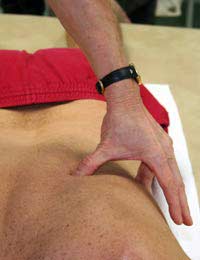
Though very rare, cauda equine syndrome can be extremely serious and should be treated as an emergency. It can lead to paralysis of the lower body and significantly impair or even cause the loss of all sensation of the bowel and bladder.
What Exactly Is Cauda Equina Syndrome?
As the spinal cord descends down the spine, nerve roots, or bundles, extend outwards allowing for transmission of nerve impulses to other parts of the anatomy.One such part of this structure occurs where the actual spinal ends at a formation of nerve roots called the conus medullaris. Beneath this structure are more nerve bundles called the cauda equine. When this collection of nerves becomes compressed, serious interferences with nerve impulse transmission can occur.
How Does It Occur?
The area of the cauda equina can become compressed for a number of reasons. A traumatic event may lead to a fracture or dislocation of the spinal column leading to the bony fragment or displaced bone, and often bleeding, which can lead to formation of a haematoma, to compress the nerves. Alternatively, a herniated disc may cause pressure to the nerves decreasing sensation and also causing inflammation of the surrounding tissues which leads to further compression; infections can also take the same effect due to an inflammatory response.Spinal tumours, though rare, may develop in the small space around the location of the cauda equina, and as it progresses and grows in size, may become large enough to encroach on the nerves and lead to compression.The other cause of cauda equine syndrome may be because of spinal stenosis when the diameter of the spinal column becomes narrowed, again leading to compression of the nerves.
Signs And Symptoms.
Symptoms of this syndrome will usually begin with pain, not only because of the compression of the nerves, but because of the cause of the compression. An official diagnosis must be made by a professional to discover the causing problem.Pain may extend from the lower back spreading down the legs into the lower extremities. This may be accompanied by numbness or tingling in the thighs, hips or buttocks especially when sitting.Loss of sensation and muscle strength may also occur as well as bowel and bladder disturbances.This can be extremely debilitating and embarrassing for the individual, and medical treatment must be sought urgently.
Treatment Options.
This condition must be treated by a healthcare professional and should not be left untreated.Initially, anti-inflammatory medications and steroids will usually be given to reduce the swelling and compression to the nerves. If an infection is thought to be the cause, anti-biotic therapy will also be commenced.For the majority of patients diagnosed with cauda equine syndrome, surgery is the most likely option. The area that has become compressed must be relieved of the pressure and a surgical decompression will be necessary.The surgery will relieve the compression by aiming to correct the causing problem whether this be repairing a fracture, reducing a dislocation or removing a herniated disc.
Cauda equine syndrome is a potentially very debilitating condition and can seriously affect a patient’s health and quality of life. It should be treated as soon as possible and diagnosis and treatment of the causing condition is necessary.